


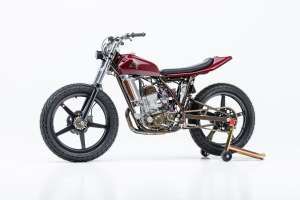
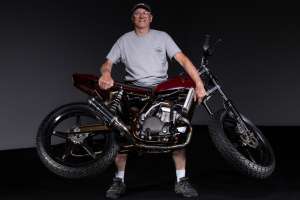
Regular readers of Bike EXIF are no strangers to the work of Richard Pollock. Over the years, the mastermind behind Mule Motorcycles has graced these pages with a stunning variety of customs, earning a global reputation as one of the absolute authorities on everything from immaculate restomods to full-blown race bikes. Richard is famous for his trackers, execution-focused machines so highly sought after that his multi-year waitlist serves as definitive proof that his craftsmanship is well worth the time. Usually, Richard knows exactly who he is building for and their specific needs, but his latest masterpiece carried an extra layer of intrigue. The ultra-light street tracker was commissioned for US tech billionaire Palmer Luckey, though Richard did not discover his high-profile client's true identity until just a few weeks before the motorcycle was scheduled for delivery.
The design brief for the project was short, like REALLY short. The client wanted a single-cylinder Honda street tracker that was 'close enough' to be street-legal and, most importantly, could be easily loaded onto his private jet, with a finished weight of 200 pounds. To put that into perspective, the baseline motorcycle, a stock modern Honda CRF450 is already a premier, high-performance motocross weapon. Utilizing a 449cc liquid-cooled single-cylinder four-stroke engine, it outputs nearly 60 horsepower. Yet, even with its lightweight dirt-bike architecture, a stock, fueled-up CRF450 still tips the scales at around 247 pounds. Shaving nearly 50 pounds off an already lean dirt bike while adding street-legal equipment meant Richard had to approach the project with the fanatical mindset of a mad scientist.
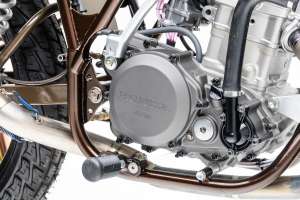
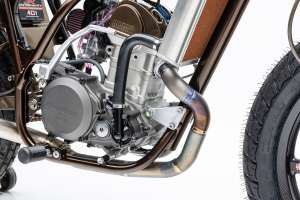
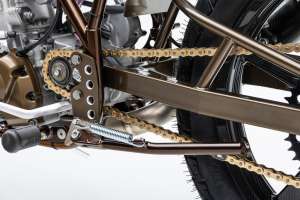
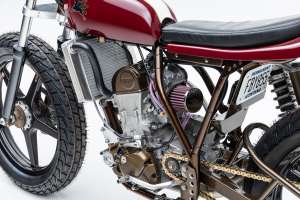
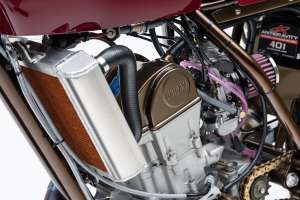
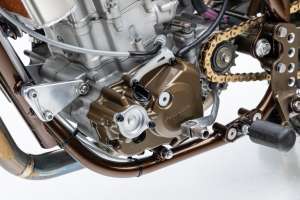
Instead of starting with a standard factory machine, Richard kicked off the build by sourcing a used, custom-framed flat tracker. The featherweight chassis was originally constructed by Mike Owens at J&M Racing Products in Maryland, a shop legendary for its ultra-light frame geometry, and Mike even supplied a special, ultra-lightweight chromoloy swingarm to maximize weight savings from the start. Inside the J&M frame sat a 2005 Honda CRF450R powerplant. To preserve real-world reliability, the engine internals were left largely stock, save for the installation of a Stage 1 Hot Cam to optimize power delivery. The fuel system received a complete overhaul courtesy of Richard's longtime cohort, Randy Troy at Precision House of Carburetors, ensuring the single-cylinder engine breathed flawlessly.
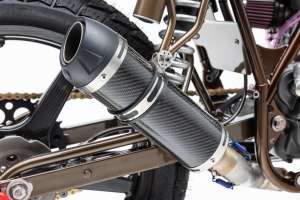
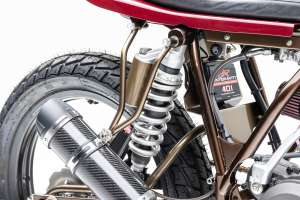
While Bike EXIF frequently showcases beautifully crafted stainless-steel exhaust systems, Richard knew that meeting the weight target would require upgrading to titanium. Sourcing pre-bent titanium tubing for a one-off build proved an absolute nightmare, and tracking down factory 2007 Honda CRF titanium headers was completely impossible. Undeterred, Richard turned to eBay and sourced three titanium header pipes from older Yamaha YZ450F models. He meticulously cut the Yamaha headers into multiple sections, piecing them together one weld at a time to hug the engine cases tightly before terminating the custom system with a carbon fiber muffler.
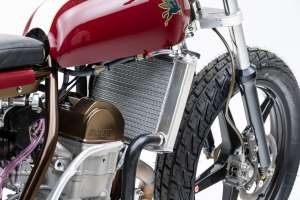
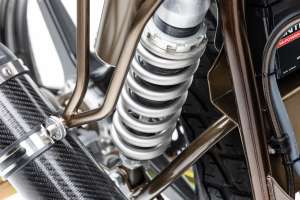
With the frame and powerplant sorted, Richard shifted his focus to the rest of the bike, where the war on weight escalated dramatically. Up front, he selected a set of vintage Yamaha RZ350 conventional forks for their weight savings, clamping them in place with custom, super-lightweight Mule triple clamps bound together with titanium hardware. At the rear, a White Power shock absorber was fitted with a custom titanium spring.
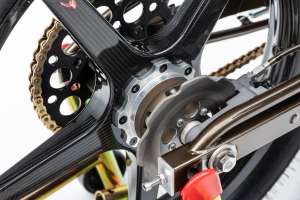
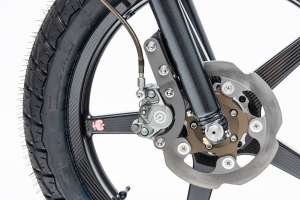
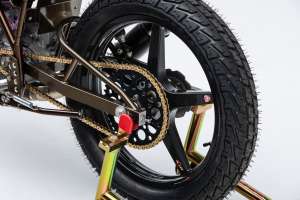
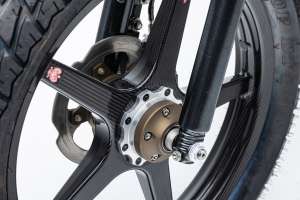
For the wheels, Richard secured a set of 19-inch BST carbon-fiber rims from GPS Racing, wrapping them in Dunlop flat-track racing tires. The carbon fiber wheels were also treated to Magnesium billet bearing carriers, cut from a 4" diameter bar and held in place by Ti bolts. The Torq-set screws holding the front rotor floating buttons in place are actually leftovers from the cruise missile program further elevating the insanity of the build.
To keep mass to an absolute minimum, front tires were deployed on both the front and the rear of the motorcycle. Recognizing that identical rubber compounds can still vary significantly in weight from the factory, Richard acquired multiple tires and weighed each individually to select the absolute lightest specimens. In the planning stages of the project, he procured three scales with varying weight ranges to measure components ranging from 2 grams to 75 pounds. Every single washer, nut, bolt, and bracket was systematically weighed, logged, and replaced with a lighter alternative whenever possible.
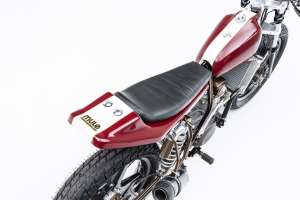
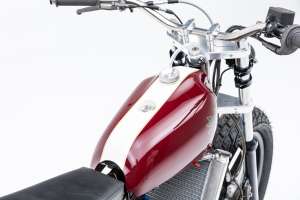
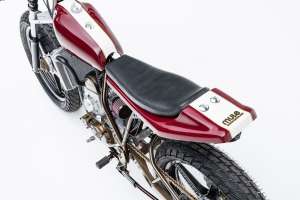
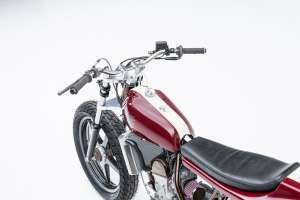
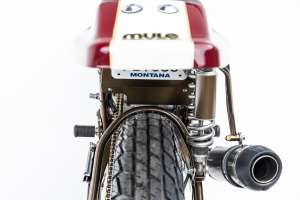
The bodywork delivers textbook flat-track proportions without adding unnecessary bulk. First Klass Glass supplied the fiberglass fuel tank and matching tracker seat section. The components were handed over to Tony Lalicatta at Uptown Cycle Design, who coated them in a sophisticated, deep burgundy base accented by a crisp white and gold racing stripes. The rich color scheme provides a striking contrast against the brown-finished frame. The whole color palette yields a mature visual depth reminiscent of a 15-year-old single malt scotch. Given Richard's absolute obsession with cutting weight on this build, one might be half-surprised he didn't choose to anodize the frame to save the few extra grams that traditional paint adds to the chassis, but we appreciate the route he selected.
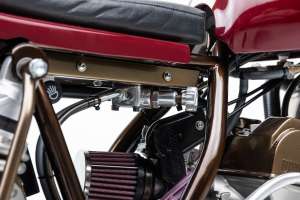
When you construct a high-power, featherweight rocket ship, engineering a highly effective braking system becomes a safety priority, and we imagine Luckey’s board of directors would agree. Richard utilized ceramic-coated titanium brake rotors to shed rotating mass, patterning the rear disc after a Gas-Gas trials bike setup that incorporates an integrated rear caliper and bracket assembly. The front end received an 8.5-inch full-floating rotor clamped by a Brembo caliper riding on a custom hanger. The true engineering brilliance of the braking system lies in its integrated front-and-rear layout. A single Brembo master cylinder routes hydraulic fluid directly to the front caliper while simultaneously operating the rear caliper via an adjustable proportioning valve neatly hidden beneath the right side of the seat. The clutch lever, perch, and control cables remained stock Honda units to preserve factory reliability and tactile lever feel.
The extreme attention to detail extended to the rider touchpoints and electrical accessories. A set of Mule stainless steel handlebars were narrowed by three inches, reducing overall weight and shrinking the bike's physical footprint to aid in loading it into the aircraft. The footpeg mounts and the entire sidestand assembly were patterned after Mule’s traditional chromoly kits, but were re-fabricated out of lightweight aluminum and paired with shortened titanium footpeg blades.
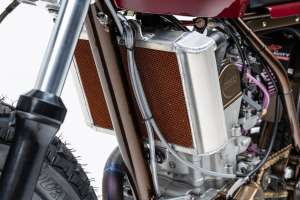
The remaining build sheet reads like an aerospace manifesto: a custom aluminum radiator from Fontana Radiator, a micro-LED taillight and dual-beam LED headlight assembly from Koso, a lightweight Antigravity lithium-ion battery, and custom-machined titanium axles, along with a titanium swingarm pivot bolt. When the fluids were topped off and the street tracker was rolled onto the scales, the final weight registered at a staggering 203 pounds with oil, coolant, and a gallon of gas. True to the mad scientist persona that makes his work so legendary, Richard admitted that in hindsight, he already knows exactly how to make the next version even lighter. We can only hope another tech billionaire steps up to fund the sequel, because we would love to see it.


Comments
I'd pay big money to see a movie of Richard's thought processes.
It's one thing to build to a budget but, to build to a weight restriction and make it live would make Sisyphus think he just has a hobby.
The detective work alone to answer "what's the lightest bit I can use here?"...there's no encyclopedia for that!
The ISP in Idaho has to wonder "what the hell is this guy looking for?!".
Another home run Richard!